Institute of Fundamental Technological Research
Polish Academy of Sciences

Partners

Pavel Shuhayeu


Recent publications
1.  Martsinchyk A., Szczęśniak A., Shuhayeu P., Bazzanella A., Mlotek M., Martsinchyk K., C., Razumkova K., Sienko A., Dybiński O., Majewska K., Bochenek K., Escalona A., Brouwer J., Haussener S., Milewski J., Demonstration of biogas upgrading and valorization via molten carbonate electrolysis, Applied Energy, ISSN: 0306-2619, DOI: 10.1016/j.apenergy.2026.127991, Vol.417, pp.1-15, 2026

Abstract:
Molten carbonate electrolysis (MCE) is a promising high-temperature route to upgrade CO2-rich biogas into a higher heating value fuel while enabling CO2 separation and utilization. This paper proposes and experimentally evaluates a biogas upgrading concept based on a three-cell MCE stack operated on synthetic biogas mixtures. The stack is fed with CH4/CO2/H2O at the cathode and air at the anode and powered by external electricity, representative of surplus renewable power. Electrochemical performance is assessed through current-voltage characteristics and steady-state operation at selected current densities, while product-gas compositions are quantified by gas chromatography. The results demonstrate stable stack operation on biogas-type feeds and show that MCE can simultaneously remove CO2 and enrich the cathodic stream in H2 (and CO), thereby increasing the lower heating value compared with the raw biogas. From the measured data, key process indicators such as CO2 removal degree, gas upgrading factor, and specific electrical energy consumption are derived and discussed. The study establishes molten carbonate electrolysis as a viable and flexible option for biogas upgrading and valorization, particularly in systems coupled to intermittent renewable electricity. Unlike conventional separation-based routes (water scrubbing, PSA, membranes) that vent the captured CO2, or SOE-based power-to-methane systems that require a separate methanation reactor, MCE simultaneously removes CO2 and generates H2/CO within a single high-temperature unit. The present results provide the first experimental evidence that a multi-cell MCE stack can serve as a viable and load-flexible pathway for biogas upgrading and valorization, particularly when coupled with intermittent renewable electricity.

Keywords:
Molten carbonate electrolysis, Biogas upgrading, CO2 separation, High-temperature electrochemical conversion, Syngas and hydrogen enrichment

Affiliations:
Martsinchyk A. - other affiliation
Szczęśniak A. - other affiliation
Shuhayeu P. - other affiliation
Bazzanella A. - other affiliation
Mlotek M. - other affiliation
Martsinchyk K. - other affiliation
C. - other affiliation
Razumkova K. - other affiliation
Sienko A. - other affiliation
Dybiński O. - other affiliation
Majewska K. - other affiliation
Bochenek K. - IPPT PAN
Escalona A. - other affiliation
Brouwer J. - other affiliation
Haussener S. - other affiliation
Milewski J. - other affiliation
2.  Ioannis P., Bochenek K., Martsinchyk A., Majewska K., Pavel S., Milewski J., Michalis K., High-performance supercapacitor based on cobalt nanostructures directly grown on engineered nickel foam substrate with enhanced ion transport and cycling stability, Next Materials, ISSN: 2949-8228, DOI: 10.1016/j.nxmate.2026.102264, Vol.12, pp.1-11, 2026

Abstract:
The electrochemical performance of cobalt-based supercapacitor electrodes is often limited by the relatively smooth surface of pristine nickel foam substrates. To overcome this limitation, a microstructurally engineered nickel foam scaffold was fabricated by introducing a porous nickel microparticle interlayer via screen printing. Cobalt nanostructures were hydrothermally grown on the modified substrate, forming a hierarchical electrode (Co@NF-M), which was systematically compared with electrodes prepared on commercial nickel foam (Co@NF). Structural and spectroscopic analyses supported the formation of predominantly crystalline spinel Co3O4, characterized by mixed Co2 + /Co3+ oxidation states. Morphological analysis further demonstrated a porous cobalt nanostructure anchored onto a roughened nickel scaffold, providing abundant active sites and facilitating electrolyte penetration and ion diffusion. Electrochemical impedance spectroscopy indicated a reduced charge-transfer resistance and improved electron transport compared to the conventional Co@NF electrode. As a result, the Co@NF-M electrode exhibited superior electrochemical performance, delivering specific capacitances of 1278, 1184, 1003, and 602 F g−1 at 0.5, 1, 5, and 10 A g−1, respectively. Furthermore, the symmetric Co@NF-M//Co@NF-M device retained 95% of its initial capacitance after 3000 cycles, demonstrating excellent cycling stability. The enhanced performance is attributed to the engineered nickel scaffold, which promotes more uniform cobalt growth and improves interfacial contact while facilitating electron and ion transport.

Keywords:
Cobalt oxide, Symmetric supercapacitor, Cycling stability, Tailored Nickel foam, Pseudocapacitor behavior

Affiliations:
Ioannis P. - other affiliation
Bochenek K. - IPPT PAN
Martsinchyk A. - other affiliation
Majewska K. - other affiliation
Pavel S. - other affiliation
Milewski J. - other affiliation
Michalis K. - other affiliation

Category A Plus

IPPT PAN

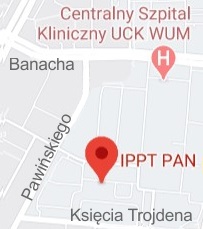
logo ippt            Pawińskiego 5B, 02-106 Warsaw
  +48 22 826 12 81 (central)
  +48 22 826 98 15
 

Find Us

mapka
© Institute of Fundamental Technological Research Polish Academy of Sciences 2026