Instytut Podstawowych Problemów Techniki
Polskiej Akademii Nauk

Partnerzy

Konrad Pauk


Ostatnie publikacje
1.  Pręgowska A., Pauk J., Ihnatouski M., Pauk K., Szczepański J., Encoding strategies for information-theoretic complexity measures in thermography-based rheumatoid arthritis detection, Biomedical Signal Processing and Control, ISSN: 1746-8094, DOI: 10.1016/j.bspc.2026.110820 , Vol.126, No.110820, pp.1-16, 2026

Streszczenie:
Rheumatoid arthritis (RA) remains a condition in which complementary, non-invasive assessment tools are actively explored. While previous thermography studies have focused mainly on temperature dynamics or
texture features, the diagnostic value of information-theoretic complexity measures is still not well understood. This study evaluates three such measures, Lempel–Ziv complexity (LZC), permutation complexity (PC), and
belief permutation entropy (BPE), for distinguishing RA patients from healthy individuals, with emphasis on the impact of different symbolic encoding strategies under no-cooling and cooling conditions. A dataset of 477 hand thermograms (291 healthy controls, 186 RA patients) was analyzed using four encoding schemes: binary, slope-direction, zero-crossing, and multilevel thresholding. All statistical conclusions were assessed at the
subject level using median aggregation per participant, with multiplicity-adjusted testing on protocol-matched cohorts to avoid within-subject dependence and availability bias. The primary endpoint was subject-level
discrimination quantified by effect size and ROC–AUC. Results indicate that the diagnostic utility of complexity measures in hand thermography strongly depends on both encoding choices and the acquisition protocol. Under
no-cooling conditions, several LZC variants and PC showed statistically significant but small group differences after BH-FDR correction (|

Słowa kluczowe:
Rheumatoid arthritis, Infrared thermography, Information theory, Lempel–Ziv complexity, Permutation entropy, Belief permutation entropy, Symbolic encoding

Afiliacje autorów:
Pręgowska A. - IPPT PAN
Pauk J. - inna afiliacja
Ihnatouski M. - inna afiliacja
Pauk K. - inna afiliacja
Szczepański J. - IPPT PAN
140p.
2.  Rudnicka Z., Pauk K., Pauk J., Ihnatouski M., Pręgowska A., Energy-efficient detection of rheumatoid arthritis using spiking neural networks and thermographic imaging, Biocybernetics and Biomedical Engineering, ISSN: 0208-5216, DOI: 10.1016/j.bbe.2026.02.004, Vol.46, pp.266-277, 2026

Streszczenie:
Rheumatoid arthritis (RA) is a chronic autoimmune disease driven by synovial immunopathology, where innate immune activity and neurobiological remodeling necessitate timely and precise diagnostic interventions. While
thermography provides a non-invasive window into the altered perfusion and thermal dynamics associated with such joint inflammation, its clinical adoption has been hindered by the computational demands of traditional
AI. We address this by proposing a novel Spiking Neural Network (SNN) framework that aligns diagnostic automation with the event-driven nature of physiological signals. By encoding spatial temperature patterns into
temporally structured spike trains, our approach introduces a biologically inspired static-to-dynamic translation, where temporal structure is computationally derived from spatial thermal distributions rather than directly measured inter-frame dynamics. To ensure statistical rigor, a strict patient-level data split was applied to a dataset of
291 healthy controls and 186 RA patients. We evaluated three SNN paradigms:Tempotron, Surrogate Gradient Learning (SGL), and Bio-Inspired Active Learning (BAL) to optimize the trade-off between diagnostic precision and efficiency. The Tempotron learning rule achieved a peak validation accuracy of up to 90.62% on a fixed patient-level split, demonstrating superior sensitivity to spatio-temporal signatures, while SGL offered the most efficient training convergence (563 s). Notably, our framework exhibits strong potential for reduced energy demands compared to traditional frame-based architectures. As one of the first studies to explore the intersection of neuromorphic computing and thermographic signatures associated with synovial inflammation, this study demonstrates the potential of spiking neural networks as lightweight and biologically inspired tools for automated RA screening in resource-constrained settings.

Słowa kluczowe:
Spiking neural networks (SNN), Rheumatoid arthritis (RA), Thermographic imaging, Bio-inspired learning algorithms, Green AI, Neuromorphic computing

Afiliacje autorów:
Rudnicka Z. - IPPT PAN
Pauk K. - inna afiliacja
Pauk J. - inna afiliacja
Ihnatouski M. - inna afiliacja
Pręgowska A. - IPPT PAN
140p.

Kategoria A Plus

IPPT PAN

logo ippt            ul. Pawińskiego 5B, 02-106 Warszawa
  +48 22 826 12 81 (centrala)
  +48 22 826 98 15
 

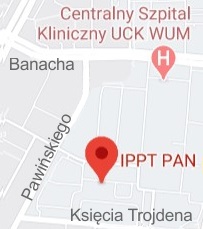
Znajdź nas

mapka
© Instytut Podstawowych Problemów Techniki Polskiej Akademii Nauk 2026