Instytut Podstawowych Problemów Techniki
Polskiej Akademii Nauk

Partnerzy

Luis F. Cofas-Vargas


Ostatnie publikacje
1.  Poma Bernaola A., Cofas-Vargas L.♦, Barroso d.♦, Pantano S.♦, Bally M.♦, Computational Methods in Physical Virology: A Critical Perspective across lengths and timescales, FEMS Microbiology Reviews, ISSN: 1574-6976, DOI: 10.1093/femsre/fuag050, pp.1-36, 2026

Streszczenie:
Physical virology investigates viral particles by focusing on their assembly, stability, mechanics, and interactions with host cells, neutralizing antibodies, and surfaces. Within this field, computational virology is becoming an indispensable pillar, serving as a “computational microscope” that bridges the spatio-temporal scales of viral processes, from individual protein dynamics to capsid assembly and cellular entry. This perspective article offers a critical overview of the current state, challenges, and future directions of computational approaches in physical virology. Our vision is anchored in the research presented at the 2025 EMBO/FEBS Lecture Course on Physical Virology held in Sant Feliu de Guixols, Spain, and complemented by a targeted survey among attendees. We survey the principal methodological frameworks in use, from all-atom to multiscale molecular simulations, mesoscale simulations, and growing integration of artificial intelligence (AI) tools. We also critically examine the central obstacles impeding the field’s progress, including the computational-experimental gap, limited accessibility to simulation data, reproducibility concerns, and systemic gender and geographic inequities. Finally, we outline future perspectives, proposing that integrating physics-aware AI with multiscale simulation frameworks, combined with community-driven data-sharing initiatives, will transform the computational microscope from a descriptive tool into a predictive engine for antiviral therapies, rational vaccine design, and biotechnological innovation.

Słowa kluczowe:
Virion, Physical Viriology, MD, Coarse-Grainded MD, Proteins, Biomolecules, Continuum methods, PB, SIRAH, GoMartini, Nanobodies, SARS-CoV-2

Afiliacje autorów:
Poma Bernaola A. - IPPT PAN
Cofas-Vargas L. - inna afiliacja
Barroso d. - inna afiliacja
Pantano S. - inna afiliacja
Bally M. - inna afiliacja
200p.
2.  Cofas-Vargas L.♦, Olivos Ramirez G., Marrink S. J.♦, Poma Bernaola A., A comparative nanomechanical study of antibody and nanobody binding to SARS-CoV-2 variants, Physical Chemistry Chemical Physics, ISSN: 1463-9076, DOI: 10.1039/d6cp00556j, Vol.28, No.15, pp.9159-9171, 2026

Streszczenie:
The receptor-binding domain (RBD) of the SARS-CoV-2 spike protein is the main target of neutralizing antibodies (Abs) and nanobodies (Nbs). Although their binding affinities are well characterized, their mechanical stability under force remains poorly understood, despite its relevance in viral attachment, immune recognition, and receptor engagement. Here, we present a comparative nanomechanical analysis of three Abs (PDI-231, S2X259, and R1-32) and three Nbs (R14, C1, and n3113.1) bound to the RBD from the WT and Omicron variants BA.4 and JN.1. Using steered molecular dynamics within the Martini 3 coarse-grained framework, we identified distinct mechanical signatures determined by epitope topology, binding architecture, and variant-specific mutations. Ab/RBD complexes display asymmetric rupture events in which the heavy chain serves as the main pathway for force transmission, while the light chain provides secondary reinforcement. The cooperative action of both chains enhances mechanical resilience, supporting rupture forces near 500 pN. In contrast, Nb/RBD complexes exhibit rigid-body dissociation with direct force transmission through compact single-domain scaffolds and minimal structural deformation. Variant-dependent unfolding of RBD regions, particularly residues 438–507 and 516–529, appears as a recurrent fracture motif contributing to adaptive mechanical response. These results establish mechanical stability as a key descriptor of immune complex robustness, complementing thermodynamic affinity. By linking architecture, epitope geometry, and force propagation, this study provides a quantitative framework for designing antibodies and nanobodies with improved mechanical resilience against viral evolution.

Afiliacje autorów:
Cofas-Vargas L. - inna afiliacja
Olivos Ramirez G. - IPPT PAN
Marrink S. J. - inna afiliacja
Poma Bernaola A. - IPPT PAN
100p.

Kategoria A Plus

IPPT PAN

logo ippt            ul. Pawińskiego 5B, 02-106 Warszawa
  +48 22 826 12 81 (centrala)
  +48 22 826 98 15
 

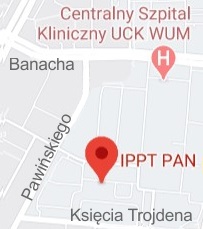
Znajdź nas

mapka
© Instytut Podstawowych Problemów Techniki Polskiej Akademii Nauk 2026